 Presence
Hear how you actually sound.
Presence listens to your rehearsal, pitch or mock interview and tells you the truth about your pace, your pauses and every "um," then shows you how to fix it. Everything runs on the device, no upload, no account.
What it measures
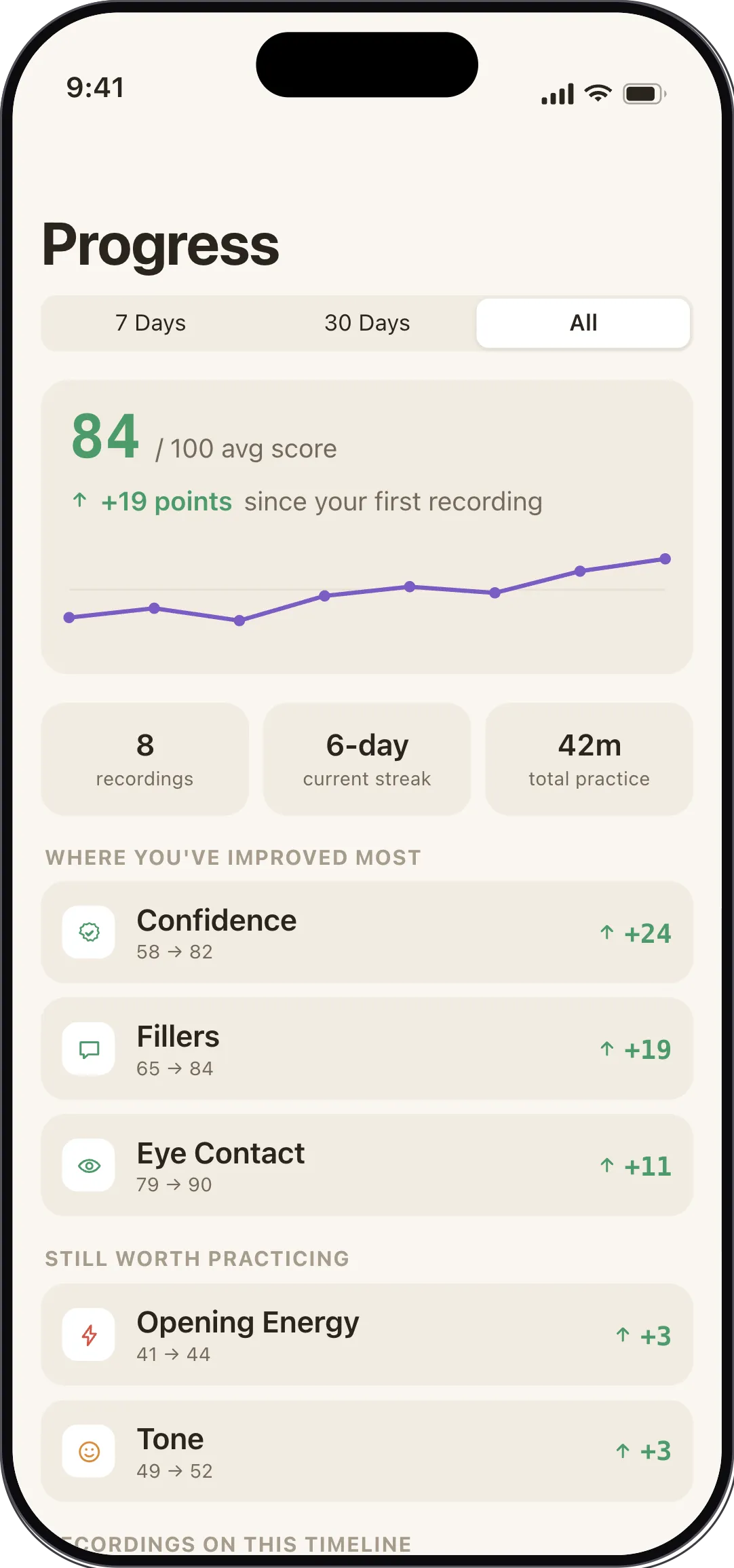
21 honest numbers after every take.
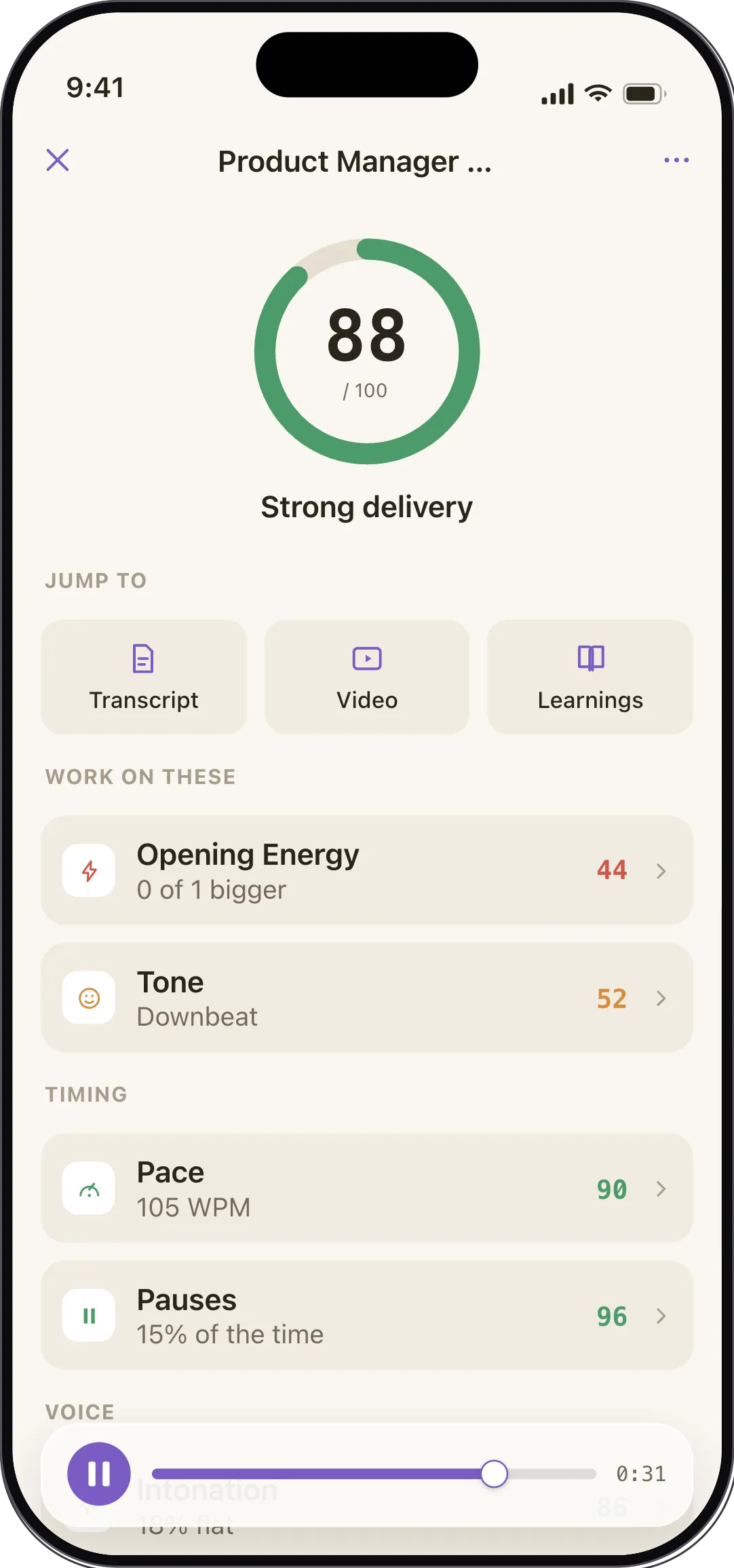
No vague encouragement. Every score comes with the sentence that explains it and one thing to try next time, in four groups: timing, voice, words and body language.
Pace
90Words per minute, scored against a comfortable 130 to 185. When pauses, not your speaking speed, pull the overall number down, it counts as pausing, not slow pace.
Intonation
86How much your pitch actually moves. Flat delivery is the fastest way to lose a room.
Fillers
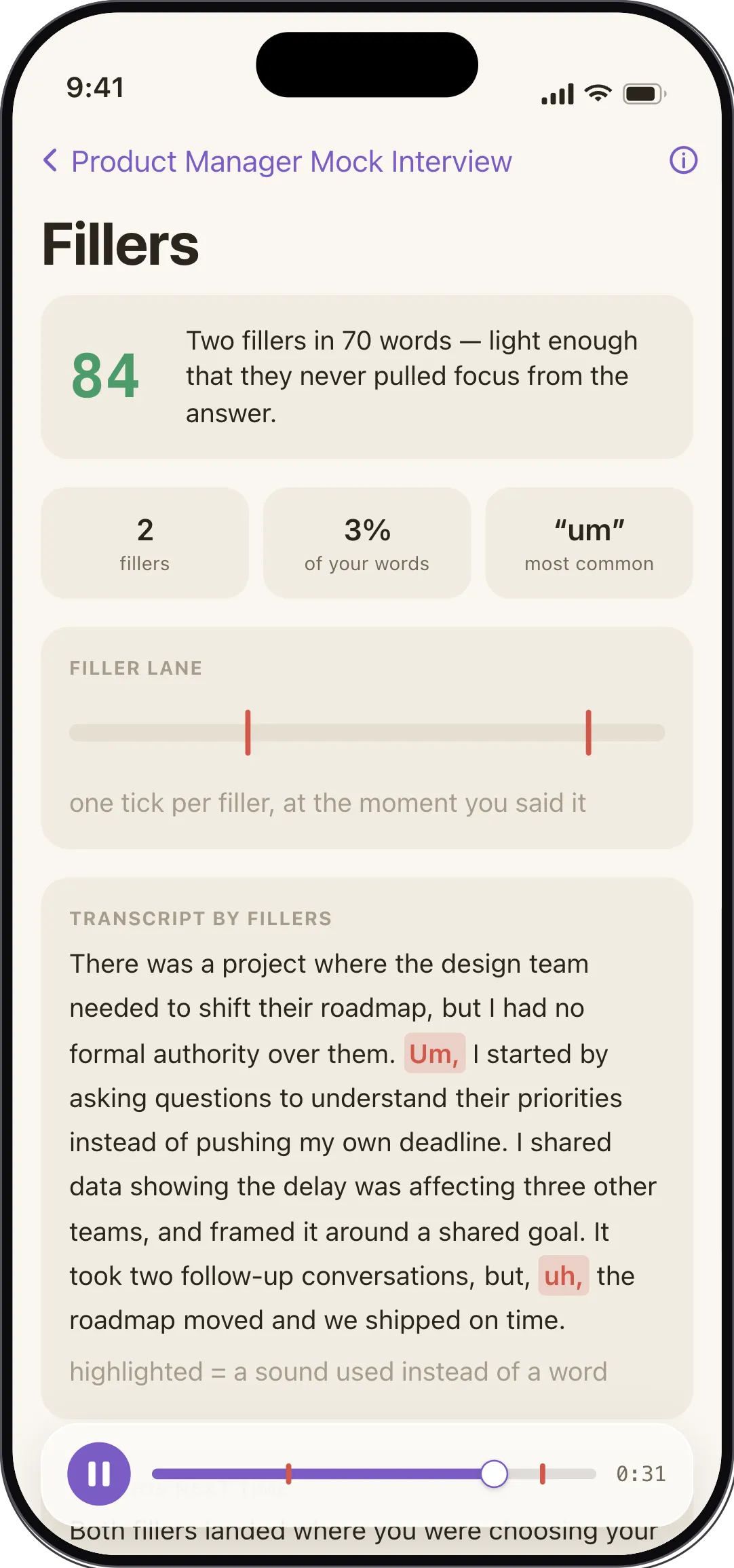
84Every um, uh and hmm, the sounds you make instead of words, counted and pinned to the exact second in the transcript.
Eye Contact
90How much of the take your head stayed pointed at the camera, not literally your eyes, with any clear break away flagged.
Nothing to practice with?
186 scripts, 150 questions, nothing left to write yourself.
Pick a category, job interviews, toasts, difficult conversations, sales pitches, dating and more, then get a ready-made script to read aloud or a set of real questions to answer on the spot. Record either one the same way as your own material.
Job Interviews · Toasts & Speeches · Difficult Conversations · Presentations · Sales Pitches · Small Talk and 8 more.
Share your report card
Proud of a take? Show someone.
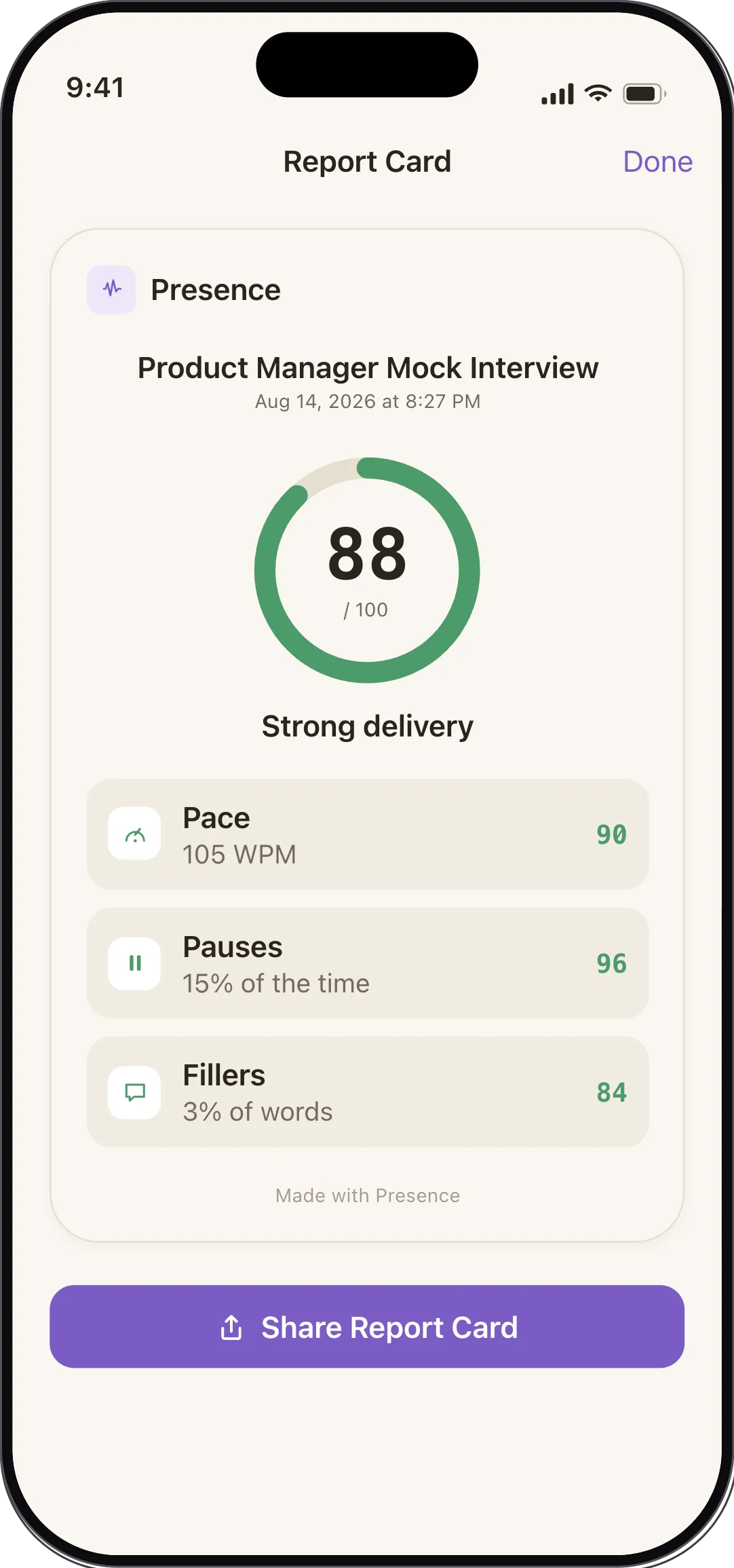
Want a coach, a mentor or a friend to look at it? Share your score and the highlights in a tap, through Messages, Mail or AirDrop. Only the card goes, never the recording.
Private by default
Your voice never leaves your phone.
Analysis runs on the device using Apple's on-device speech and vision frameworks. There is no account to make, no cloud bucket with your rehearsals in it, and nothing to delete later. Presence counts how the app is used, anonymously, to fix what breaks. It never sees what you said.
From the blog
Practical answers, not marketing copy.
Why You Run Out of Breath While Speaking, and What Actually Helps
Running out of air mid-sentence usually comes from long unbroken stretches of talking, higher volume and nerves pushing breath shallow. Here's how to plan your breaths instead of waiting to run dry.
Is "Like" a Filler Word? Why Some Tools Don't Count It
Plain "like" is the filler word people name most often, but it's also a real word in most sentences. Here's how to tell when it's a tic, and how to track it when your tool doesn't.
Why Practice Doesn't Carry Over to the Real Thing
You can run a talk ten times at home and still rush, flatten and fill every gap once you're in the room. Here's why that gap exists, and how to practice under conditions that actually transfer.